
Reshaping Global Supply Chain
Insights from the DBS Metals and Mining Indonesia Forum 2025
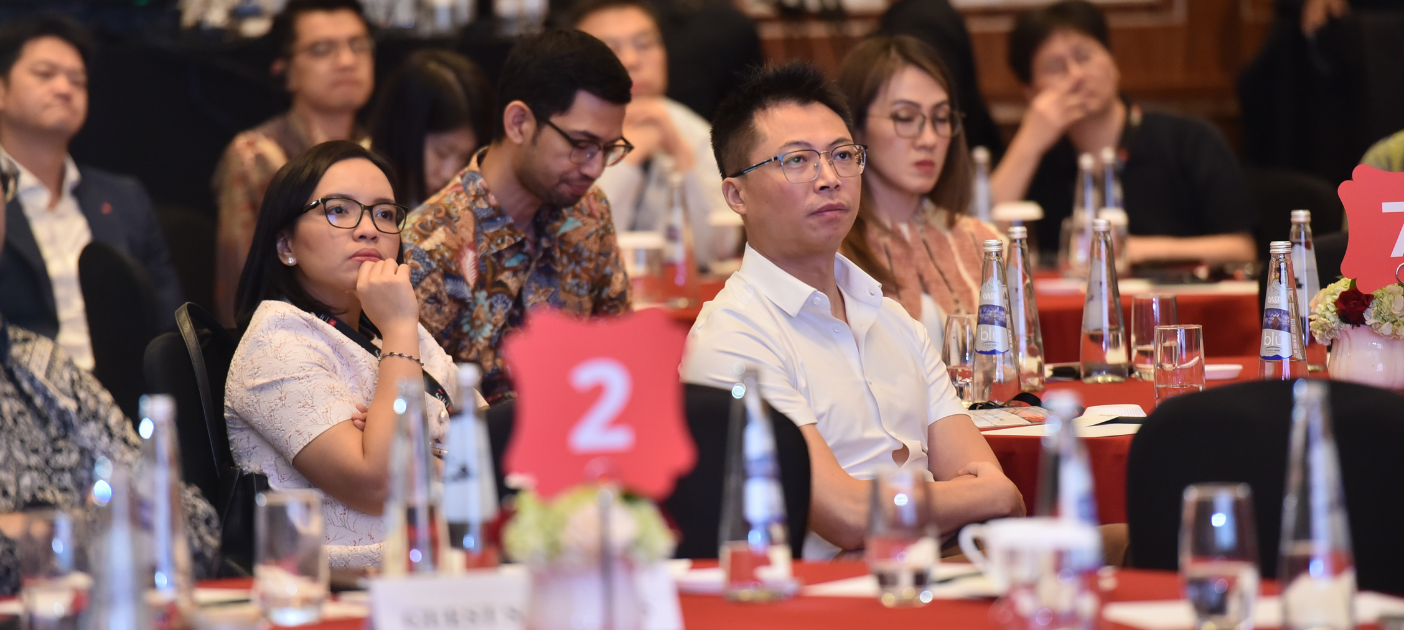
The 4th Annual DBS Metals and Mining Indonesia Forum 2025: Forging Global Connections opened with strategic insights from Septian Hario Seto, Deputy for Investment and Mining Coordination. Seto outlined Indonesia’s position within a global economy experiencing heightened geopolitical fragmentation, shifting trade flows, and increasingly protective industrial policies. He emphasised that maintaining economic growth above 5 per cent over the next decade is essential for achieving the national aspiration of becoming a high-income country by 2045. This direction aligns with Indonesia’s return to upper-middle-income status in 2022 and the government’s staged development roadmap for 2025–2045.

Seto also highlighted that global conditions are becoming significantly more volatile. Tariff realignments, supply-chain decoupling, and commodity price corrections have contributed to a decline in Foreign Direct Investment (FDI), even though global trade volumes continue to rise due to front-loading behaviour among major economies. The United States (US) has shown stronger-than-expected growth, supported by Artificial Intelligence (AI)–driven sectors, while China is navigating challenges related to domestic demand and overcapacity. These pressures have resulted in a surge of low-priced exports to non-US markets. In response, Seto called for greater policy agility, improved investment facilitation, and accelerated deregulation. A key example is Government Regulation (GR) 28/2025, which shortens the Environmental Impact Assessment (AMDAL) licensing process from two to three years to roughly four months.

The forum then moved to a regional macroeconomic overview delivered by Radhika Rao, Executive Director and Senior Economist at DBS Bank. Rao noted that the Association of Southeast Asian Nations (ASEAN) continues to show resilience amid global turbulence. This is supported by sound macroeconomic fundamentals and ongoing structural reforms. China’s Outbound Direct Investment (ODI) into ASEAN has expanded steadily over the past five to six years, with Singapore, Indonesia, Thailand, and Vietnam receiving the largest inflows. Indonesia recorded its highest FDI levels in 2024, particularly in base metal processing, driven by long-term commitments from Singapore, China, Hong Kong, and Japan.

Regulatory updates were presented by Antonius Sanyojaya, Tax Partner at PwC Indonesia. He outlined the integration of Indonesia’s tax administration under the new Core Tax Administration System (Coretax), which unifies tax registration, filing, payment, data consolidation, and audit process into a single framework. Although Coretax is intended to streamline compliance, companies must navigate the transitional requirements. These include the shift toward eXtensible Markup Language (XML)-based data submissions and the need to adjust Enterprise Resource Planning (ERP) systems to support the new tax reporting processes.
Sanyojaya also explained the implementation of Global Minimum Tax (GMT) under Minister of Finance Regulation (PMK) 136/2024. The GMT applies to Multinational Enterprises (MNEs) with consolidated annual revenues exceeding EUR 750 million. Under the jurisdictional Effective Tax Rate (ETR) approach, MNEs operating in low-tax jurisdictions may be required to pay top-up taxes should their ETR fall below 15 per cent. Regardless of the top-up tax liabilities, GMT requires significant compliance challenges prompting MNEs to review their tax reporting systems and addressing the data readiness and requirements.

Complementing the tax overview, Puji Atma, Legal Services Director at PwC Indonesia, outlined legal and regulatory developments affecting the minerals and metals sector. He described the restrictions on licensing new nickel smelters under GR 28/2025, under which permits are restricted for smelters that produce only intermediate products (Nickel Pig Iron, Ferronickel, Nickel Matte, Mixed Hydroxide Precipitate), with licensing processed as manufacturing via the Online Single Submission (OSS) system and requiring an Industrial Business License (IUI).
He also discussed the revised royalty framework under GR 19/2025, including progressive rates—nickel ore moving from a flat 10 per cent to 14–19 per cent linked to the Mineral Reference Price (Harga Mineral Acuan, HMA), and updated rates for other minerals tied to HMA—alongside incentives for domestic processing. In addition, he highlighted stricter requirements on the retention and placement of Foreign Exchange Export Proceeds for Natural Resources (Devisa Hasil Ekspor Sumber Daya Alam, DHE SDA) under GR 8/2025, including 100 per cent mandatory placement within Indonesia’s financial system for a minimum of 12 months for exports meeting the threshold. He concluded with an overview of the updated Work Plan and Budget (Rencana Kerja dan Anggaran Biaya, RKAB) process under the Ministry of Energy and Mineral Resources (MEMR) Regulation 17/2025, which has shifted from a threeyear cycle to annual submissions, with amendments generally limited to once per year (by 31 July) except in specified exceptional circumstances.

From the market perspective, Mike Zhang, Managing Director and Group Head of Metals and Mining at DBS Bank, observed that demand for critical minerals remains strong despite geopolitical uncertainty and trade fragmentation. Over the next decade, global mining investment is projected to reach USD 3.5 trillion, with copper and gold receiving the largest shares. Indonesia continues to strengthen its presence in nickel and battery-materials supply chains, supported by significant investments in High-Pressure Acid Leach (HPAL) technology, even in an environment of oversupply. Copper markets remain tight due to concentrate shortages, while aluminium is becoming more strategically important as demand rises across China, India, and ASEAN.

In closing, the forum underscored Indonesia’s growing influence within the global critical minerals ecosystem. Continued progress in structural reforms, downstream industrialisation, and investor engagement is positioning Indonesia as an increasingly central and reliable participant in regional and global supply chains.

